
Can Birth Control Pills Expire? Dates, Storage and What to Do Next

Birth control pills have an expiration date, and the way you store them matters before that date arrives. Heat, moisture, damaged packaging or other unsuitable conditions can undermine the quality of a medicine. A tablet that looks ordinary does not provide a reliable test of its remaining strength.
Check the pack. If the date has passed or the storage history concerns you, arrange replacement advice rather than guessing how much pregnancy protection remains. Tell the pharmacist whether you have already taken the tablets and whether a gap in reliable contraception has occurred.
What the expiration date actually tells you
Manufacturers use stability testing to support a medicine's labeled shelf life and storage conditions. The expiration date marks the period for which those data support the product's strength, quality and purity under the specified conditions. It does not mean that storage instructions stop mattering until the final day.
Medicines can deteriorate over time, and exposure outside their intended storage conditions can add uncertainty. After expiration, you cannot assume that the tablets still meet the standards behind their approval. For an oral contraceptive, that uncertainty matters because the intended benefit includes preventing pregnancy.
The date does not tell you exactly what happens to every individual tablet afterward. It does not give you a personal grace period, and it does not establish that a pack becomes poisonous the following morning. The practical decision concerns replacing a product whose quality you can no longer rely on.
Where to find the date on your prescription
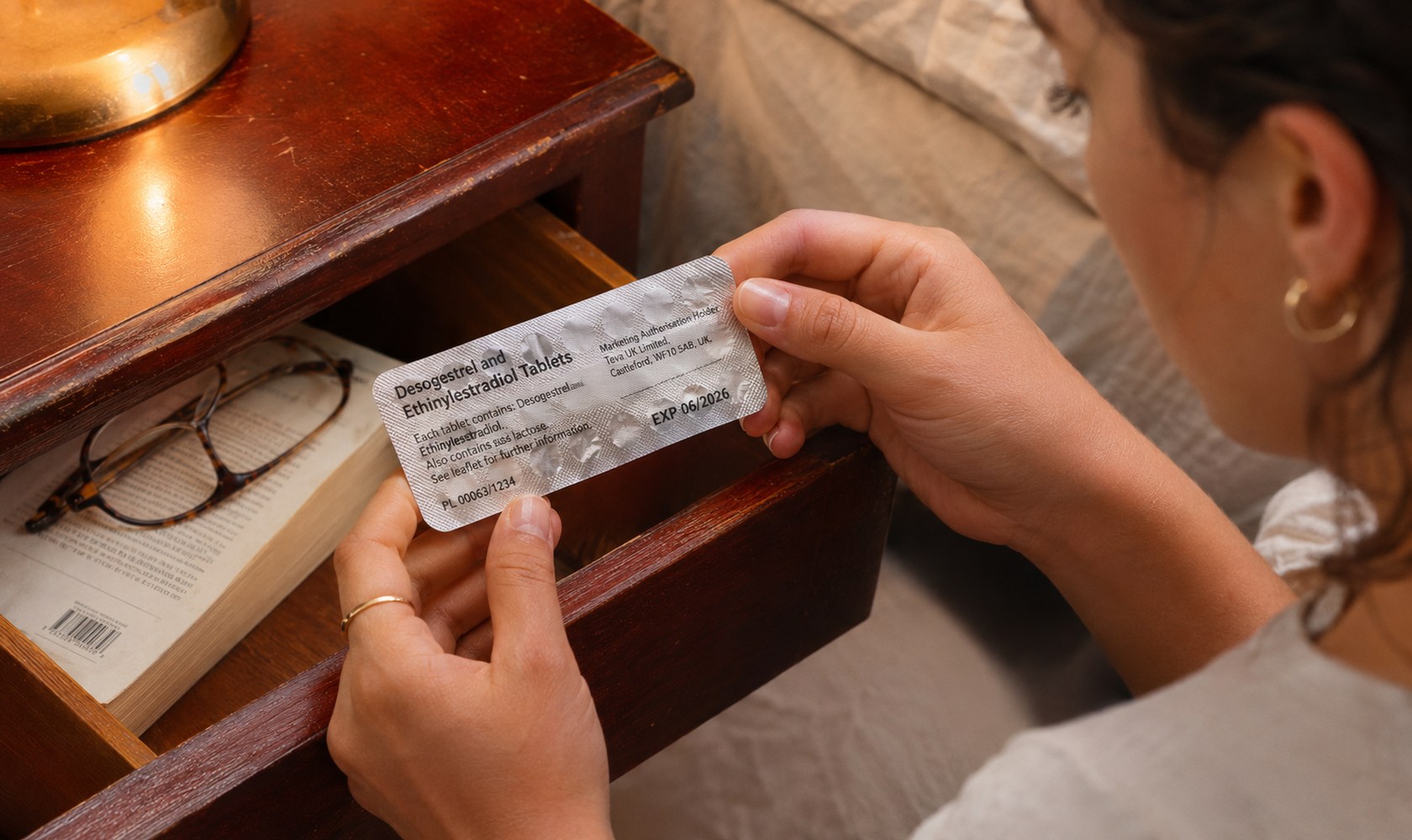
Look on the outer carton, blister packaging, bottle or pharmacy label, depending on how the product came to you. Manufacturers often place "EXP" before the date. Keep the outer packaging when it contains information that does not appear clearly on each strip.
A pharmacy label can also contain a dispensing date or another use-by instruction. Do not assume that every date means the same thing. If you see two different dates or cannot interpret the format, ask the pharmacy to explain which one controls use of the supplied medicine.
Check any spare packs as well as the one you currently use. A new prescription does not make an older pack new again. Arrange refills with enough time to replace an expiring supply without creating a gap between active tablets.
Heat, humidity and damaged packaging change the assessment
Heat, strong light, moisture and exposure to air can affect medicine quality. The specific product instructions set the storage requirements, so use those rather than a rule copied from another prescription. Conditions during travel or a delivery can matter as well as storage at home.
A bathroom cabinet can expose tablets to humidity from showers. A car, direct sunlight or a location beside a heat source can expose them to temperatures that ordinary room storage would avoid. Choose a dry place that fits the leaflet and keeps the medicine away from children and pets.
Inspect the packaging when you collect the prescription. Torn blister foil, a broken seal or tablets that appear cracked, discolored or otherwise damaged warrant a pharmacy review. An unexpired date does not override visible damage or a concern about contamination.
Appearance cannot settle every question. A tablet may retain its color even when storage has been unsuitable. Describe what happened, including the approximate temperature or duration if you know it, rather than asking the pharmacist to judge from a photograph alone.
Why an expired pack creates uncertainty about protection
Oral contraception depends on using the intended medicine according to its schedule. If a tablet no longer provides the expected dose, its appearance cannot tell you how well it will prevent pregnancy. You also cannot calculate the remaining protection from the number of days since expiration.
Published effectiveness estimates describe contraceptive use under particular conditions; they do not measure the performance of your expired pack. A typical-use figure includes use errors across a group. It should not become a percentage estimate for tablets that have passed their date.
Do not increase the dose to compensate. Taking extra tablets cannot restore a product's tested quality and may cause side effects. Replacing the medicine and checking whether you need backup protection addresses the problem more directly than inventing a catch-up regimen.
What to do if you have already used the tablets
Contact a pharmacist or clinician with the product name, expiration date and a description of the storage history. Explain how many doses you took, when you last used a reliable pack and whether you missed any active tablets. Keep the packaging available during the conversation.
If you had unprotected sex during a possible lapse, ask promptly whether emergency contraception fits the situation. Do not wait for a missed period before raising the question. Ask how to continue the regular contraceptive and when a pregnancy test would help.
Use condoms or avoid sex while obtaining advice if you cannot establish that you have reliable contraceptive cover. The instructions for starting a replacement pack can depend on the formulation and the interruption. A combined pill and a progestin-only pill do not always use the same backup interval.
Seek separate advice if someone took several tablets or developed symptoms. Evidence about accidental overdose does not establish the safety or effectiveness of an expired product. Tell the care team what the person took rather than treating a study of another situation as reassurance.
Store the replacement according to its own instructions
Keep tablets in the packaging supplied for them unless the pharmacist recommends otherwise. The container helps protect the medicine and retains identification, batch and date information. Loose tablets in an unmarked container make both storage and later questions harder to resolve.
Read the leaflet before using a pill organizer or transferring tablets. Different packs use different active and inactive tablets, and mixing them can also create a scheduling error. If a bottle contains packing material, ask the pharmacist whether to remove it rather than applying a universal rule to every product.
Review the storage location when the seasons or your routine change. A dry drawer that suits ordinary home storage may not answer how to transport the pack on a hot day. Ask about travel storage before leaving, keep the date information and arrange a replacement when the quality remains uncertain.
Sources
- Food and Drug Administration. Expiration Dates: Questions and Answers. https://www.fda.gov/drugs/pharmaceutical-quality-resources/expiration-dates-questions-and-answers
- Centers for Disease Control and Prevention. Combined Hormonal Contraceptives. https://www.cdc.gov/contraception/hcp/usspr/combined-hormonal-contraceptives.html
- Centers for Disease Control and Prevention. Progestin-Only Pills. https://www.cdc.gov/contraception/hcp/usspr/progestin-only-pills.html
Related reading
- Errin Birth Control: Daily Use, Missed Pills and Estrogen-Free Options
- How to Choose a Birth Control Pill: Hormones, Schedules, Benefits and Risks
- Health Guide
Medical Disclaimer: This content is provided for informational and educational purposes only and does not constitute personalized medical advice, diagnosis, or treatment. Always consult a qualified physician or licensed healthcare provider with any questions regarding a medical condition or prescription medication. Read our Editorial & Medical Review Policy.