
Seasonal Affective Disorder: Recognizing a Pattern and Finding Treatment

Seasonal affective disorder describes depression that follows a recurring seasonal pattern. Winter-pattern symptoms often begin as daylight decreases and improve in spring or summer. A less common summer pattern also occurs, so the diagnosis is not simply another name for disliking cold weather.
A repeated change in mood, sleep, appetite, energy, or functioning deserves assessment. Treatment can involve light therapy, psychotherapy, medication, and practical support, with the choice guided by the pattern and medical history.
What symptoms can look like
Winter-pattern depression may involve sleeping more, low energy, increased appetite or carbohydrate cravings, and withdrawal from usual activities. General depressive symptoms can include persistent low mood, loss of interest, irritability, hopelessness, guilt, and difficulty concentrating or making decisions.
Some people mainly notice that ordinary tasks become harder each year rather than identify sadness immediately. A person can continue working while struggling substantially outside visible responsibilities.
Summer-pattern episodes can present differently, including poor sleep, reduced appetite, agitation, or anxiety. Neither season nor one symptom establishes the diagnosis. The course over time and the effect on daily life matter.
Thoughts of self-harm, inability to remain safe, or severe impairment require prompt care regardless of the season. Do not wait for spring or assume a seasonal explanation makes the risk less serious.
Why seasonal changes may matter
Light helps regulate circadian rhythms, which influence sleep and alertness. Changes in daylight can affect those systems. Researchers also study serotonin, melatonin, light sensitivity, and inherited vulnerability in seasonal depression.
These mechanisms do not establish that every person has a simple measurable shortage of serotonin or excess of melatonin. A hormone test alone does not diagnose SAD or choose the treatment.
Geography can influence daylight exposure, and a family history of mood disorders can contribute to risk. Work schedules, time indoors, stress, and other circumstances may also affect the pattern. They do not provide a deterministic explanation for every case.
Distinguish a seasonal episode from a difficult season
Holidays, financial pressure, anniversaries, isolation, work demands, and changes in activity can make a season difficult. A clinician considers these circumstances rather than assuming that every winter low reflects the same biological pattern.
Seasonal-pattern assessment looks for repeated episodes with a characteristic onset and improvement, commonly over at least two years, and considers episodes outside that season. The diagnosis also depends on whether major depression or bipolar illness explains the mood pattern.
You do not need to wait years before asking for help. A first substantial episode still deserves assessment and treatment. Recording dates can help the clinician follow whether a seasonal pattern becomes clear.
Prepare the history that guides treatment
Note when symptoms begin and improve, sleep and appetite changes, daily functioning, previous episodes, and treatments tried. Include whether the pattern follows daylight, work schedules, recurring events, or another change.
Tell the clinician about periods of elevated or unusually irritable mood, reduced need for sleep, increased activity, or impulsivity. A bipolar history can change recommendations for antidepressants and light therapy.
Bring prescriptions, supplements, eye conditions, and medicines that increase light sensitivity. The assessment may also consider thyroid problems, sleep disorders, substance use, or other contributors to fatigue and low mood.
A questionnaire can help organize the history, but it does not replace clinical assessment. Ask which diagnosis the team is considering and how the proposed treatment addresses the pattern you experience.
Light therapy for winter-pattern symptoms
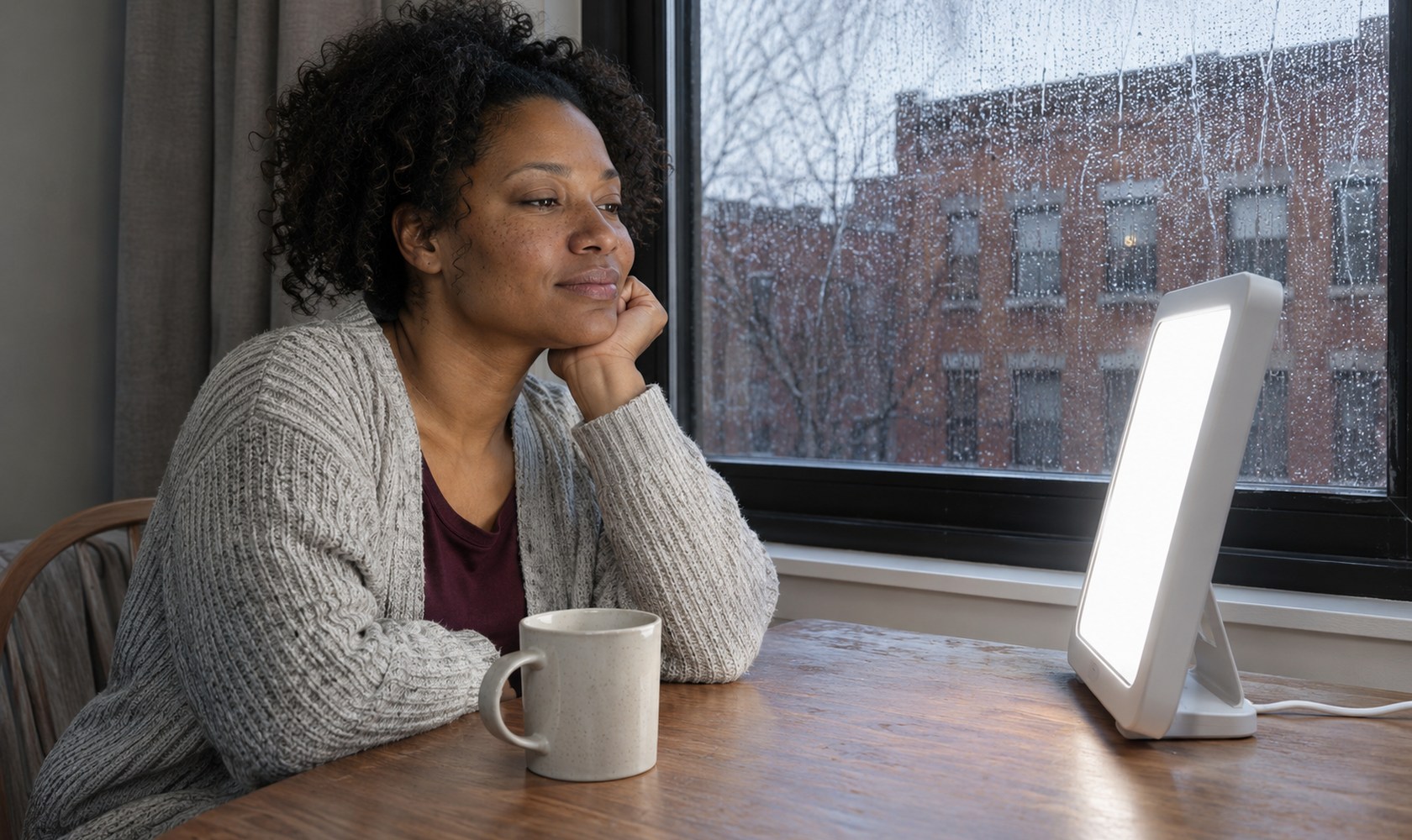
Bright-light therapy uses a suitable light box to provide structured exposure. A common approach uses a 10,000-lux device for roughly half an hour in the morning, with the exact duration and distance determined by the device and clinical advice.
Use a product designed for the purpose that filters ultraviolet light. A tanning lamp or an ordinary decorative lamp is not an interchangeable substitute. Keep your eyes open as instructed without staring directly into the source.
The distance that produces the intended intensity differs between devices. Follow the manufacturer's instructions and the treatment plan rather than using one universal measurement from an article. More light or longer exposure does not automatically provide faster benefit.
Some people notice improvement within days or weeks, but response varies. Ask when to review benefit, how long to continue during the season, and what to do if symptoms do not improve.
Check light-therapy precautions
Headache, eyestrain, agitation, or sleep changes can occur. A clinician may adjust timing, duration, or another part of the plan. Do not keep extending sessions when a reaction appears.
Eye disease or medicines that increase light sensitivity may require advice from an eye specialist or another treating clinician. A product sold without a prescription can still require an individual safety discussion.
People with bipolar illness need particular guidance because light exposure and antidepressant treatment can affect mood stability. Report reduced need for sleep, unusual energy, irritability, or impulsive behavior rather than interpreting every increase in activity as uncomplicated recovery.
If the device makes symptoms worse, contact the care team. Light therapy is one treatment option, not something you must tolerate regardless of the response.
Psychotherapy can address seasonal thoughts and routines
CBT adapted for seasonal depression can examine predictions about the season and rebuild activities that provide meaning, contact, or satisfaction. It does not require you to pretend that darkness or winter limitations feel pleasant.
Behavioral activation may involve planning manageable activities before withdrawal becomes established. A therapist can help identify options that fit the weather, mobility, finances, and energy available rather than offer a generic demand to go outside more.
Work can also address all-or-nothing beliefs, such as the idea that nothing enjoyable can happen until summer. A balanced response leaves room for real difficulty while identifying actions that remain possible.
Discuss whether individual, group, or appropriate remote therapy would fit. Ask about the clinician's experience with depression and seasonal patterns and how you will practice skills between sessions.
Medication treatment and prevention
A clinician may use an antidepressant to treat a depressive episode according to the diagnosis and medical history. SSRIs are among the options, but no one product suits everyone. Other prescriptions may fit when symptoms, previous response, or adverse effects influence the choice.
Bupropion extended-release has a specific role in preventing seasonal major depressive episodes in suitable patients. Prevention involves planning before the expected onset, not assuming that any bupropion formulation or occasional dose provides the same effect.
Ask when to start, how to monitor, and how to stop or continue the medicine when the season changes. Seizure risk, eating-disorder history, other medicines, and bipolar-related symptoms can influence suitability.
Benefits and side effects develop on different timelines. Report concerning agitation, mood elevation, or new suicidal thoughts promptly. Do not change an established antidepressant dose according to one day's weather or abruptly stop when a brighter week arrives.
Daily routines that support the main treatment
A consistent sleep-wake schedule, regular meals, movement, and contact with supportive people can help maintain function. Daylight exposure outdoors or in the work environment may help some people, but it does not replace a structured treatment when symptoms are substantial.
Choose activity that fits safety and ability. A short walk or an accessible indoor routine may be more workable than an ambitious seasonal fitness plan. A difficult day does not require abandoning the routine entirely.
Plan for the barriers that recur each year: travel in darkness, reduced social contact, work shifts, or an inaccessible outdoor environment. Practical support can matter alongside a medicine or light device.
Be cautious with supplements
Vitamin D, melatonin, and herbal products attract interest, but the evidence, purposes, and risks differ. Correcting a deficiency is not the same as proving that everyone with seasonal depression needs a high-dose supplement.
Melatonin affects timing and sleep in particular settings, which does not make it a universal treatment for low mood. St. John's wort can interact with many medicines, including antidepressants. Do not add it to a prescription plan without checking.
Bring the exact ingredients and doses to the clinician. Natural labeling cannot establish that a product is effective, suitable during pregnancy, or safe alongside other treatments.
Plan ahead once the pattern becomes clear
If episodes recur, arrange a review before the usual start rather than waiting until functioning deteriorates. Agree on what to begin, which symptoms to track, and when to contact the team if the plan does not help.
Include a safety plan for severe symptoms and a practical plan for appointments, refills, and access to the light device if you use one. The aim is earlier action, not a guarantee that a difficult season can never occur.
At follow-up, review mood, sleep, appetite, activity, functioning, and adverse effects. Ask whether the history still fits the diagnosis and what should change before the next season.
Sources
- National Institute of Mental Health. Seasonal Affective Disorder. https://www.nimh.nih.gov/health/publications/seasonal-affective-disorder
- National Institute of Mental Health. Mental Health Medications. https://www.nimh.nih.gov/health/topics/mental-health-medications
Related reading
- Anxiety and Panic Attacks: How They Differ and When to Get Help
- Coping With Anxiety in Daily Life
- Health Guide
Medical Disclaimer: This content is provided for informational and educational purposes only and does not constitute personalized medical advice, diagnosis, or treatment. Always consult a qualified physician or licensed healthcare provider with any questions regarding a medical condition or prescription medication. Read our Editorial & Medical Review Policy.