
Hair Loss Treatment Options: Medicines, Procedures, and Daily Care

Hair loss treatment starts with identifying the cause. Inherited male-pattern thinning, temporary shedding, alopecia areata, infection, and scarring disorders need different approaches. A product that helps one pattern can waste time or irritate the scalp when another condition drives the loss.
After diagnosis, compare the likely benefit, side effects, daily effort, cost, and time needed to judge results. Preserving existing hair may be a realistic success even when a treatment cannot restore the density you had years ago.
Establish the diagnosis and the goal
A clinician examines the pattern, scalp, and hair shafts and asks how quickly the change developed. Sudden patches, pain, scale, redness, or a smooth shiny area can require attention that a routine hair-growth product cannot provide.
For male-pattern loss, discuss whether the aim is slowing progression, improving density, restoring a hairline, or covering an established bare area. The options differ according to how much hair remains and the availability of donor follicles if surgery enters the discussion.
Bring previous photographs and a list of products you used, with dates and frequency. Treatment that lasted a few days does not establish the same evidence as a consistent several-month trial. A realistic goal and review point help prevent endless changes based on daily mirror checks.
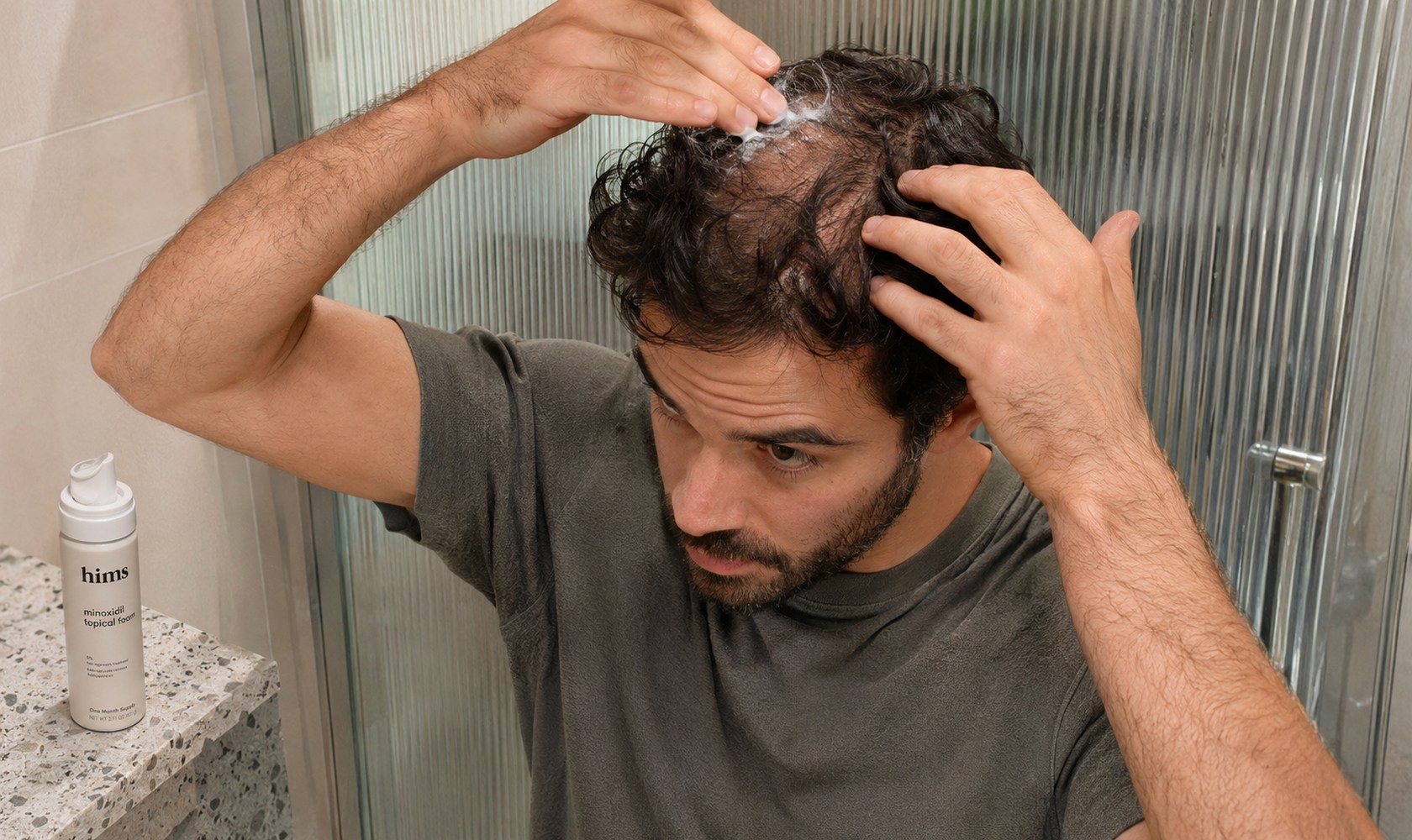
Topical minoxidil
Minoxidil solution or foam can help some people with pattern hair loss maintain hair or gain density. The topical formulation is widely available without a prescription, but you still need to check whether the label fits your age, sex, scalp condition, and pattern of loss.
Apply it to the scalp in the amount and frequency specified for the actual product. Instructions differ, and a statement that one formulation uses one daily application should not replace another label's directions. Coating the hair or using extra amounts does not establish a stronger response.
Improvement takes months. Some people notice temporary increased shedding after starting, but unusual or persistent shedding deserves a review. Keep photographs in similar lighting and ask when the clinician considers the trial long enough to judge.
Dryness, itching, burning, redness, flaking, or unwanted hair growth away from the scalp can occur. A foam may avoid an ingredient that irritates someone using a solution, but a formulation change needs a review of the cause rather than an assumption that every reaction is harmless.
Stop and obtain medical advice about symptoms such as dizziness, palpitations, swelling, or chest discomfort. Do not swallow a topical product. Oral minoxidil is a separate off-label prescription approach with systemic effects and different monitoring requirements.
Oral finasteride
Finasteride reduces formation of DHT by inhibiting 5-alpha-reductase. In suitable men with androgenetic alopecia, the hair-loss formulation can slow further thinning and produce some regrowth. It does not treat every cause of shedding.
Daily use and enough time matter. A clinician usually assesses the pattern over months rather than days, and ongoing use maintains the benefit. Stopping treatment can allow the underlying process to resume.
Discuss changes in libido, erections, ejaculation, mood, breast tissue, or fertility concerns. Some people report sexual symptoms that continue after stopping. A prescriber should help you understand the uncertainty and respond to symptoms without minimizing them.
Tell clinicians arranging prostate-specific antigen testing that you use finasteride because the medicine can affect interpretation. Do not replace the prescribed hair-loss strength with a higher-dose product for prostate symptoms simply because it contains the same ingredient.
Using medicines together
A dermatologist may combine finasteride and minoxidil because they address hair growth through different mechanisms. The plan should state the amount, frequency, expected timeline, and how to respond to adverse effects from each medicine.
Starting several products at once can make it difficult to identify which one irritates the scalp or causes another symptom. Tell the clinician about shampoos, supplements, compounded products, and medicines obtained online. A topical route does not guarantee that an active ingredient has no systemic effect.
Ask what happens if you stop one component. Understanding which benefit depends on continued treatment can help you decide whether a routine fits your budget and daily life.
Shampoos and serums: examine the evidence
A shampoo can help remove buildup or treat dandruff and inflammation when its ingredients fit the diagnosis. That role differs from proving that it reverses genetic follicle miniaturization. Labels such as DHT blocker or growth activator do not establish equivalence to an approved medicine.
Ketoconazole, caffeine, biotin, saw palmetto, and other ingredients appear in hair products. The evidence, formulation, concentration, and study population vary. A claim about one ingredient cannot automatically support every shampoo or serum containing it.
Biotin supplements do not provide an established answer for hair loss in someone without deficiency and can interfere with some laboratory tests. Tell the clinician about them before testing. Avoid layering products that repeatedly leave the scalp sore, itchy, or inflamed.
Hair transplantation
Transplant surgery moves follicles from a donor area to an area with less coverage. FUT typically uses a strip of donor scalp, while FUE removes individual follicular units. Neither technique creates an unlimited new supply of follicles.
Suitability depends on donor density, the pattern and stability of loss, scalp health, expectations, and future progression. A surgeon should explain how the proposed hairline will look if surrounding native hair continues to thin.
Risks include bleeding, infection, scarring, poor growth, discomfort, and a result that looks unnatural or provides less density than expected. FUE can also leave scars; the absence of a strip does not mean the procedure leaves none.
Published satisfaction rates from selected groups do not guarantee your outcome. Ask who performs the procedure, what follow-up includes, when growth should appear, and how the clinic handles complications. Compare results from patients with a similar starting pattern.
Platelet-rich plasma
PRP treatment usually involves drawing blood, preparing a platelet-rich portion, and injecting it into the scalp. Some studies report benefit for pattern hair loss, but protocols, preparation, schedules, and outcomes vary. That variation complicates comparisons between clinics.
Ask what diagnosis the treatment addresses, how the clinician measures improvement, how many sessions they propose, and whether maintenance will add to the cost. Pain, bruising, and other procedural risks still matter even though the material comes from your own blood.
PRP does not consist of stem cells and should not carry a promise that it creates new follicles or cures baldness. A clinic should explain the evidence for its actual approach rather than use a general description of growth factors as proof of a guaranteed result.
Light devices and experimental treatments
Low-level light devices may help selected patients, but devices and protocols differ. Ask about the evidence for the specific device, the time commitment, expected benefit, and the distinction between regulatory clearance and a promise of complete regrowth.
Stem-cell and other regenerative claims need closer scrutiny. Laboratory research or a small early study does not establish a routine safe treatment. High price, technical language, or a clinic's before-and-after gallery cannot replace controlled evidence and appropriate oversight.
Do not stop a treatment that helps simply because a new procedure sounds more permanent. Discuss how the options compare for your diagnosis and whether the proposed addition changes the expected result enough to justify its burden.
Make the ongoing routine workable
Gentle scalp care, adequate nutrition, and treatment of any diagnosed scalp condition support comfort and health. They cannot guarantee that inherited thinning will stop. Correct a confirmed deficiency rather than taking large amounts of several supplements without a reason.
Hair fibers, a hair system, a shorter cut, or shaving can provide immediate cosmetic options while you assess treatment or instead of it. These choices do not interfere with your right to seek medical advice, and choosing no treatment is also reasonable.
At review, compare photographs, symptoms, adherence, cost, and satisfaction with the result. Ask which part of the plan should continue and what would justify a change. Seek earlier assessment for sudden loss, scalp pain, inflammation, or a concerning adverse effect rather than waiting for a cosmetic review.
Sources
- American Academy of Dermatology. What is male pattern hair loss, and can it be treated?. https://www.aad.org/public/diseases/hair-loss/treatment/male-pattern-hair-loss-treatment
- DailyMed. Propecia - finasteride tablet. Prescribing information. https://dailymed.nlm.nih.gov/dailymed/drugInfo.cfm?setid=6f904709-65aa-44ce-b144-b4c8a0416e36
- Food and Drug Administration. Potential risks associated with compounded topical finasteride products. https://www.fda.gov/drugs/human-drug-compounding/fda-alerts-health-care-providers-compounders-and-consumers-potential-risks-associated-compounded
Related reading
- Understanding Male Hair Loss: Causes, Patterns, and Treatment Choices
- Finasteride: Uses, Doses, Benefits, and Side Effects
- Health Guide
Medical Disclaimer: This content is provided for informational and educational purposes only and does not constitute personalized medical advice, diagnosis, or treatment. Always consult a qualified physician or licensed healthcare provider with any questions regarding a medical condition or prescription medication. Read our Editorial & Medical Review Policy.