
NuvaRing: How the Vaginal Ring Works, Its Schedule and Possible Side Effects

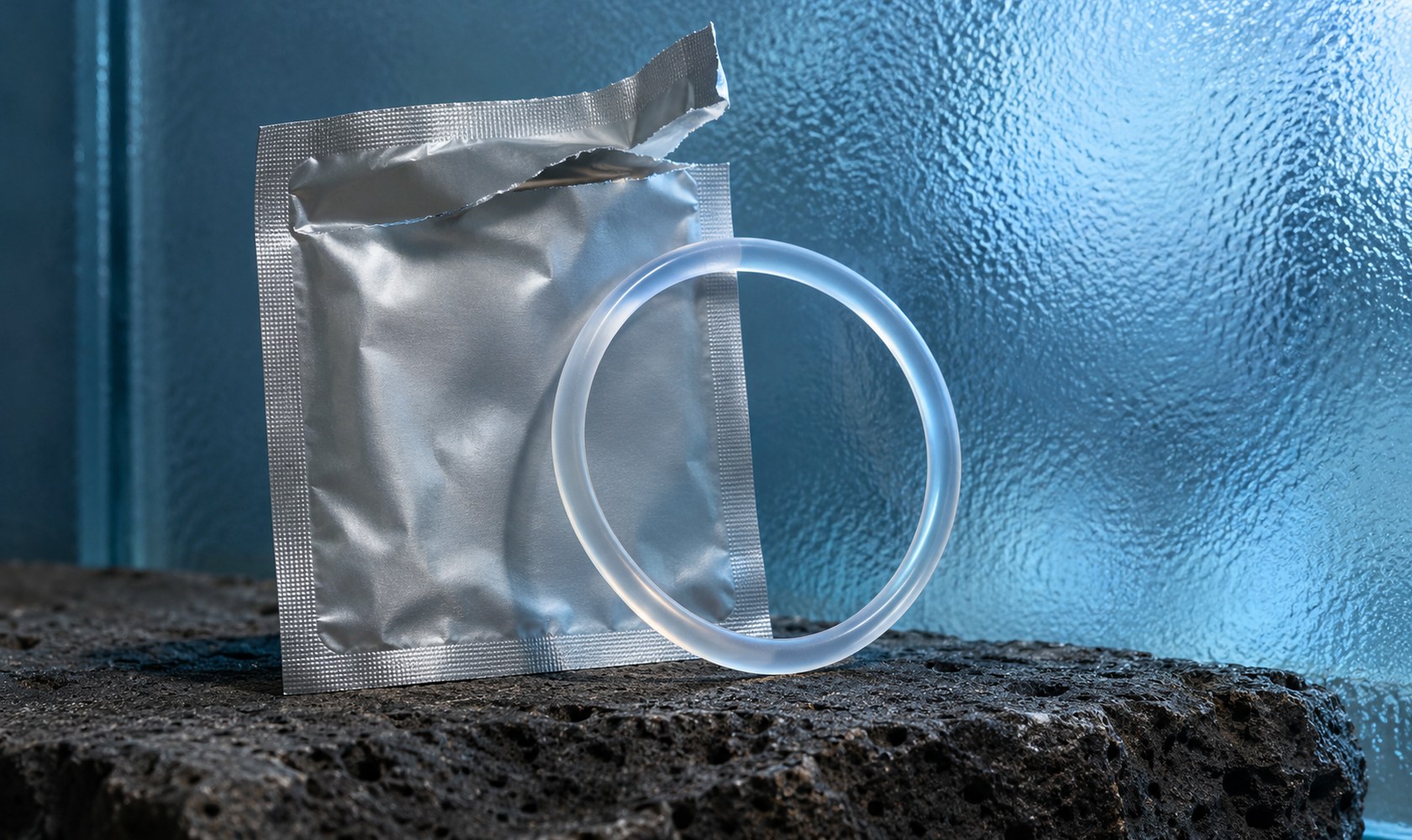
NuvaRing releases etonogestrel and ethinyl estradiol from a flexible ring placed in the vagina. It provides combined hormonal contraception without a daily tablet. The monthly routine can suit someone who dislikes taking pills, but it still requires correct timing and a review of estrogen-related risks.
Know the schedule. Insertion, removal, an accidental expulsion and a delayed replacement create different questions. Keep the product instructions available rather than assuming that a ring can remain out for any convenient length of time.
How a vaginal ring prevents pregnancy
The ring releases a progestin and an estrogen, which enter the bloodstream through vaginal tissue. The hormones mainly suppress ovulation and also affect cervical mucus. The method does not rely on physically blocking sperm in the way a barrier contraceptive does.
That distinction matters when comparing methods. A ring can replace the daily pill task, but it remains an estrogen-containing contraceptive. Vaginal delivery does not mean the hormones stay only in the vagina or that cardiovascular precautions no longer apply.
NuvaRing does not protect against HIV or other sexually transmitted infections. If infection protection or temporary contraceptive backup matters, discuss a compatible barrier method. The ring itself does not establish that sex carries no other risks.
What changes compared with taking a pill
A scheduled ring routine can reduce the number of days when you need to remember an action. Someone who repeatedly misses pills may find that useful. Someone who feels uncomfortable inserting or removing a vaginal product may prefer another method.
Research comparing the ring with combined pills has generally found similar pregnancy-prevention performance and overall acceptability, while some studies report differences in bleeding control. Those comparisons do not guarantee that one person will experience fewer side effects or a more predictable cycle.
The route avoids swallowing a tablet every day. It may change how a person experiences treatment, but it does not prove that everyone will feel less nauseous or tolerate the ring better. Consider the actual effects during follow-up rather than treating delivery through vaginal tissue as a promise of greater safety.
Compare practical tasks as well. You need a replacement supply, a way to track insertion and removal, and instructions for an unexpected problem. A method that needs attention less often can still fail if a scheduled step repeatedly slips.
The usual three-week routine
The standard labeled routine involves one ring in place for three weeks, followed by one ring-free week. Insert a new ring after that interval on the scheduled day and around the same time. Follow the directions supplied with your prescription if a clinician recommends a different regimen.
Do not extend the ring-free interval because bleeding has not stopped or has not started. The schedule, rather than the appearance of bleeding, determines the next insertion. Contact the pharmacy if you cannot obtain the next ring on time.
Ask the clinician to demonstrate or explain insertion and removal before you begin. Read the instructions for positioning and check that you can manage the steps comfortably. Persistent discomfort, difficulty removing it or uncertainty about its position deserves advice rather than repeated forceful attempts.
Starting or switching to the ring
The start date depends on your menstrual timing and the contraceptive you used before. The product information describes starting on the first day of bleeding, with backup instructions for some other starts. A clinician may use current guidance to plan a start that fits your situation.
Explain when you last used another method and whether any unprotected sex followed a lapse. A ring inserted today does not automatically address an exposure that occurred before it. Get the start date and temporary backup instructions together.
Pregnancy, recent childbirth, miscarriage, abortion and breastfeeding require their own assessment. Estrogen-containing contraception can be unsuitable during parts of the postpartum period and may affect milk production. Do not use a general calendar rule without discussing the circumstances with the prescriber.
Confirm what to do if your period does not appear as expected. The clinician may ask about use errors and testing rather than interpreting every absent bleed in the same way. Keep a record of the insertion and removal dates if the schedule becomes uncertain.
What to do if the ring slips out
Sex, tampon removal or straining during a bowel movement can sometimes dislodge the ring. If it comes out, check how long it has been out and which week of the cycle you are in. These details determine whether simple reinsertion is enough or you need other steps.
The NuvaRing label describes rinsing an expelled ring with cool to lukewarm water and reinserting it promptly when it has been out for less than three hours. Longer interruptions require week-specific instructions and can require backup. Do not assume that a rule for another vaginal ring applies.
If you do not know how long the ring remained out, contact a pharmacist or clinician promptly. Explain whether sex occurred during the possible lapse. Ask about pregnancy testing and emergency contraception when appropriate instead of waiting for the next scheduled replacement.
A damaged ring or a ring left in too long
A ring can occasionally disconnect or lose its shape. The label says to discard and replace a disconnected ring. Report discomfort or injury, and ask about protection if the damage also caused an interruption in use.
The labeled information distinguishes a ring left in for up to four weeks from one retained longer. Beyond four weeks, remove it and seek advice about excluding pregnancy, restarting and temporary backup. Do not turn that contingency instruction into a routine plan to extend every cycle.
Keep replacement and disposal instructions accessible. Avoid flushing a ring or leaving a used product where a child or pet could reach it. Ask the pharmacy how to handle a damaged or unused product when the leaflet does not answer your question.
Side effects that can affect daily use
Headache, nausea, breast symptoms, acne, spotting and changes in mood or sexual interest can occur with combined hormonal contraception. The ring can also cause vaginal irritation, discharge or discomfort. A new symptom needs a description of its timing and severity, not an assumption that every change has the same cause.
Tell the clinician about itching, pain or discharge that persists or worsens. An infection or another vaginal condition can need assessment rather than a change in contraception alone. Mention any vaginal products you use, including medicines, as part of that review.
Some effects settle during continued use, but you do not need to tolerate a symptom indefinitely to prove that the method works for you. Ask what interval to allow and which problem would justify an earlier review. If the clinician recommends switching, obtain a plan that maintains pregnancy protection.
Who needs another contraceptive option
The prescriber needs to review a history of blood clots, stroke, heart disease, migraines with aura, uncontrolled hypertension, liver disease, hormone-sensitive cancer and unexplained uterine bleeding. Known hypersensitivity to a component also matters. These examples do not replace the product's complete eligibility assessment.
People over 35 who smoke cigarettes should not use NuvaRing according to its warning. Tell the clinician about all nicotine use and other risk factors. A vaginal route does not avoid the cardiovascular concerns associated with combined hormonal contraception.
Seek emergency assessment for sudden shortness of breath, chest pain, one-sided leg swelling or sudden neurological symptoms. Explain that you use a combined hormonal ring. Do not wait to see whether a serious symptom disappears after the next removal.
Which backup methods fit with the ring
NuvaRing can interfere with the positioning of a diaphragm, cervical cap or internal condom, so its instructions do not recommend these as backup methods. The placement issue does not mean that combining them somehow creates an additional clotting mechanism.
Ask which external condom or other temporary approach the clinician recommends for the specific lapse. Also review medicines or supplements that might reduce hormonal contraceptive effectiveness. Keep the final instructions with the prescription so you can act on them when the routine changes.
Ask about tampons and any vaginal treatment you need during use. A product can raise a positioning or removal question without necessarily changing hormone absorption. Check that removing a tampon has not accidentally pulled out the ring, and record any interruption before seeking advice.
Sources
- DailyMed. NuvaRing: etonogestrel and ethinyl estradiol. Prescribing information. https://dailymed.nlm.nih.gov/dailymed/drugInfo.cfm?setid=524c7188-ee84-4d5c-a6ab-e7a5ae36e22b
- Centers for Disease Control and Prevention. Combined Hormonal Contraceptives. https://www.cdc.gov/contraception/hcp/usspr/combined-hormonal-contraceptives.html
- Centers for Disease Control and Prevention. U.S. Medical Eligibility Criteria for Contraceptive Use, 2024. https://www.cdc.gov/mmwr/volumes/73/rr/rr7304a1.htm
Related reading
- Xulane Birth Control Patch: Weekly Use, Application and Safety Limits
- Sprintec Birth Control: Tablet Schedule, Uses, Side Effects and Precautions
- Health Guide
Medical Disclaimer: This content is provided for informational and educational purposes only and does not constitute personalized medical advice, diagnosis, or treatment. Always consult a qualified physician or licensed healthcare provider with any questions regarding a medical condition or prescription medication. Read our Editorial & Medical Review Policy.