
Sex After a Herpes Outbreak: Healing, Risk, and Partner Decisions

Wait until a herpes outbreak has fully healed before resuming sexual contact involving the affected area. That means more than waiting for the worst pain to pass. Tingling, burning, open sores, and healing lesions all matter when deciding whether to pause contact.
Healing reduces the risk associated with an active outbreak, but it does not make transmission impossible. HSV can reach the skin without visible symptoms, so precautions and a conversation with your partner still matter between episodes.
Know which symptoms mark an active episode
An outbreak may begin with tingling, itching, burning, or tenderness before you see anything. Blisters can then open into painful sores. The first recognized episode may also involve fever, body aches, swollen glands, or pain when urinating.
Later episodes often last less time and cause milder symptoms, although the pattern varies. A small lesion still counts as a symptom. The fact that you can tolerate touch or have no fever does not establish that contact cannot transmit HSV.
If you are unsure whether a new irritation represents an outbreak, ask a clinician rather than testing the question through sex. Other skin conditions and infections can resemble herpes and may need their own assessment.
Let the affected skin heal before contact
Avoid vaginal, anal, or oral contact that involves the affected area during warning symptoms and while sores remain. Do not rely on a condom to make contact with active lesions safe because it may not cover the skin that sheds the virus.
Wait for sores to heal and for the skin to return to its usual condition. An arbitrary number of days after the first blister cannot replace an assessment of healing. The timing differs between people and between episodes.
Finishing an antiviral course does not automatically mean the skin has healed. If symptoms persist, new lesions appear, or healing takes longer than expected, contact the prescriber. Do not extend or repeat treatment on your own simply to reach a planned date for sex.
Understand the risk that remains after healing
HSV can shed from skin or mucosal surfaces when no sores or warning sensations appear. Clinicians call this asymptomatic shedding. You cannot identify every shedding episode by looking closely at the skin or judging how well you feel.
HSV-1 commonly causes oral herpes, and HSV-2 commonly causes recurrent genital herpes, but either type can infect the genital area. Oral sex can transmit oral HSV-1 to a partner's genitals. The virus type and infection site can influence the pattern of recurrence and shedding.
No symptom-free interval guarantees that transmission risk has reached zero. Avoid promises that a partner cannot acquire HSV because the last outbreak ended a week ago or because a medicine has prevented visible recurrences.
Use barriers with a realistic understanding of protection
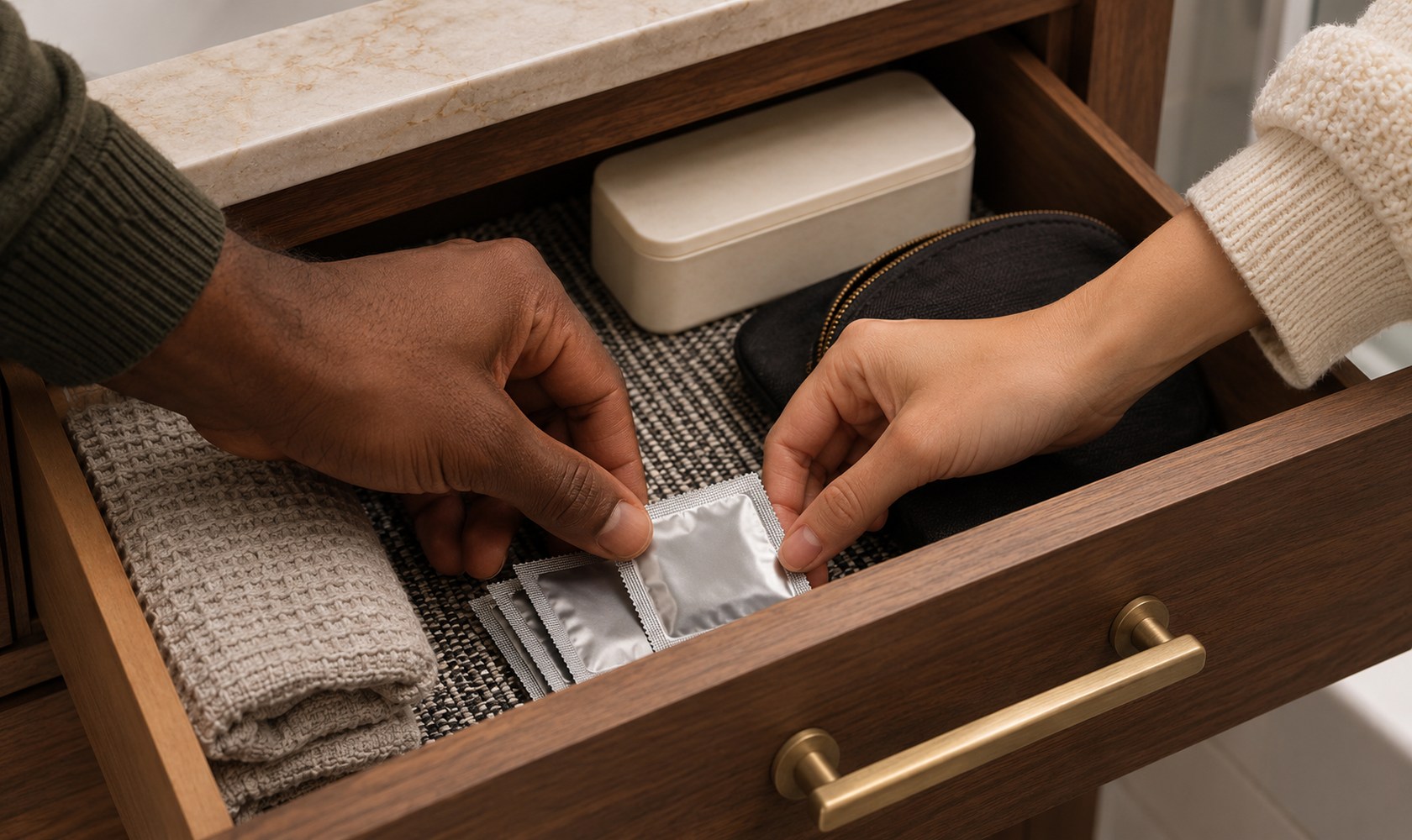
External or internal condoms and dental dams can reduce contact with covered tissue. Use the barrier suited to the activity and follow its instructions from the start of contact. Barriers cannot cover every potentially infectious area.
Choose a lubricant compatible with the barrier to reduce friction and breakage. Pain, irritation, or discomfort during sex is a reason to pause and address the cause rather than push through an encounter. Rough contact can irritate recently healed tissue.
Barriers also play a role in preventing other infections and, depending on the method, pregnancy. HSV treatment does not provide those forms of protection. Discuss each concern separately rather than assuming that one precaution addresses every risk.
Ask whether suppressive treatment fits your circumstances
Acyclovir, valacyclovir, and famciclovir can treat genital outbreaks or reduce recurrences. Episodic treatment starts around the beginning of an episode. Daily suppression aims to prevent frequent symptomatic episodes and may suit people with distressing or recurrent symptoms.
Daily valacyclovir has evidence for reducing HSV-2 transmission in certain couples when other precautions also form part of the plan. It does not guarantee protection, and results from one regimen or population do not establish identical benefits for all medicines or situations.
Tell the clinician about your recurrence pattern, partner concerns, other medicines, kidney health, and pregnancy possibility. Ask how to handle a breakthrough outbreak and when to review the need for ongoing suppression.
Talk before sex rather than during a crisis
Choose a time when neither person feels rushed. Explain what you know about the type and location of your HSV infection, which symptoms you recognize, and what treatment or precautions you use. Allow your partner time to ask questions and decide what they feel comfortable with.
A new diagnosis cannot automatically establish when you acquired HSV or who transmitted it. Some people carry the virus without recognizing symptoms for a long time. Avoid turning uncertainty into a claim about a partner's honesty.
If a partner wants testing, suggest discussing the purpose and limitations with a clinician. Blood tests cannot answer every question about infection site or timing, and false-positive or early negative results can complicate interpretation.
Keep intimacy from becoming a test of reassurance
A diagnosis may trigger shame, fear of rejection, or repeated requests for a guarantee that nobody can give. These reactions deserve attention, but you do not need to treat sex as proof that a partner accepts you. Consent remains necessary for every activity and can change at any point.
During a pause in sexual contact, talk about other forms of closeness that both people want and that avoid the affected area. Do not substitute an activity without considering which skin or mucosal surfaces it involves.
Counseling or a support group can help if worry starts to dominate the relationship. Look for support that understands HSV rather than advice that reinforces shame or sells a cure. A clinician can help you practice explaining the remaining risk without minimizing or exaggerating it.
Support health without blaming yourself for outbreaks
Some people notice episodes during stress, illness, or fatigue. Sleep, exercise, and a balanced diet can support well-being, but no lifestyle routine guarantees that HSV will remain inactive. Sunlight often triggers oral cold sores; it does not explain every genital recurrence.
Keep a short symptom record if it helps you notice a pattern. Avoid sweeping food restrictions based on an isolated episode, and do not replace antiviral treatment with supplements or essential oils. An outbreak does not prove that you failed to manage stress correctly.
Seek care for persistent lesions, worsening pain, difficulty urinating, or symptoms during pregnancy. Tell the maternity team promptly about a possible new infection, particularly late in pregnancy, so they can plan care around the timing rather than waiting for the next routine visit.
Sources
- Centers for Disease Control and Prevention. Genital Herpes - STI Treatment Guidelines. https://www.cdc.gov/std/treatment-guidelines/herpes.htm
- Centers for Disease Control and Prevention. Screening for Genital Herpes. https://www.cdc.gov/herpes/testing/index.html
Related reading
- UTI Symptom Relief: What Helps and When to Get Care
- Menopause Hormone Therapy: Options, Benefits, and Risks
- Health Guide
Medical Disclaimer: This content is provided for informational and educational purposes only and does not constitute personalized medical advice, diagnosis, or treatment. Always consult a qualified physician or licensed healthcare provider with any questions regarding a medical condition or prescription medication. Read our Editorial & Medical Review Policy.