
Cold Sore Treatments: Antivirals, Symptom Relief, and Prevention

A cold sore often starts before a blister appears. Tingling, itching, or burning near the lip can give you an opportunity to begin treatment early. Antiviral medicines can shorten an episode, while simple protective care can make the sore less uncomfortable as it heals.
Treatment does not remove herpes simplex virus from the body. The aim is to reduce symptoms and disruption, recognize problems that need medical care, and limit contact that could pass the infection to someone else.
Recognize the usual course of an outbreak
HSV-1 causes most cold sores, also called oral herpes. Small fluid-filled blisters usually develop on or near the lips after an early period of tingling or tenderness. They may open, crust, and heal over roughly ten to fourteen days, although the course varies.
After the original infection, HSV remains in nerve cells and can reactivate. A recurrent sore does not mean you acquired a new infection. The first recognized episode may cause more widespread discomfort, fever, swollen glands, or a sore throat, while later episodes often remain more localized.
Not every sore around the mouth is herpes. A split lip, angular cheilitis, a canker sore, and other conditions can require different care. Ask for an assessment if the appearance, location, or pattern differs from your usual episodes.
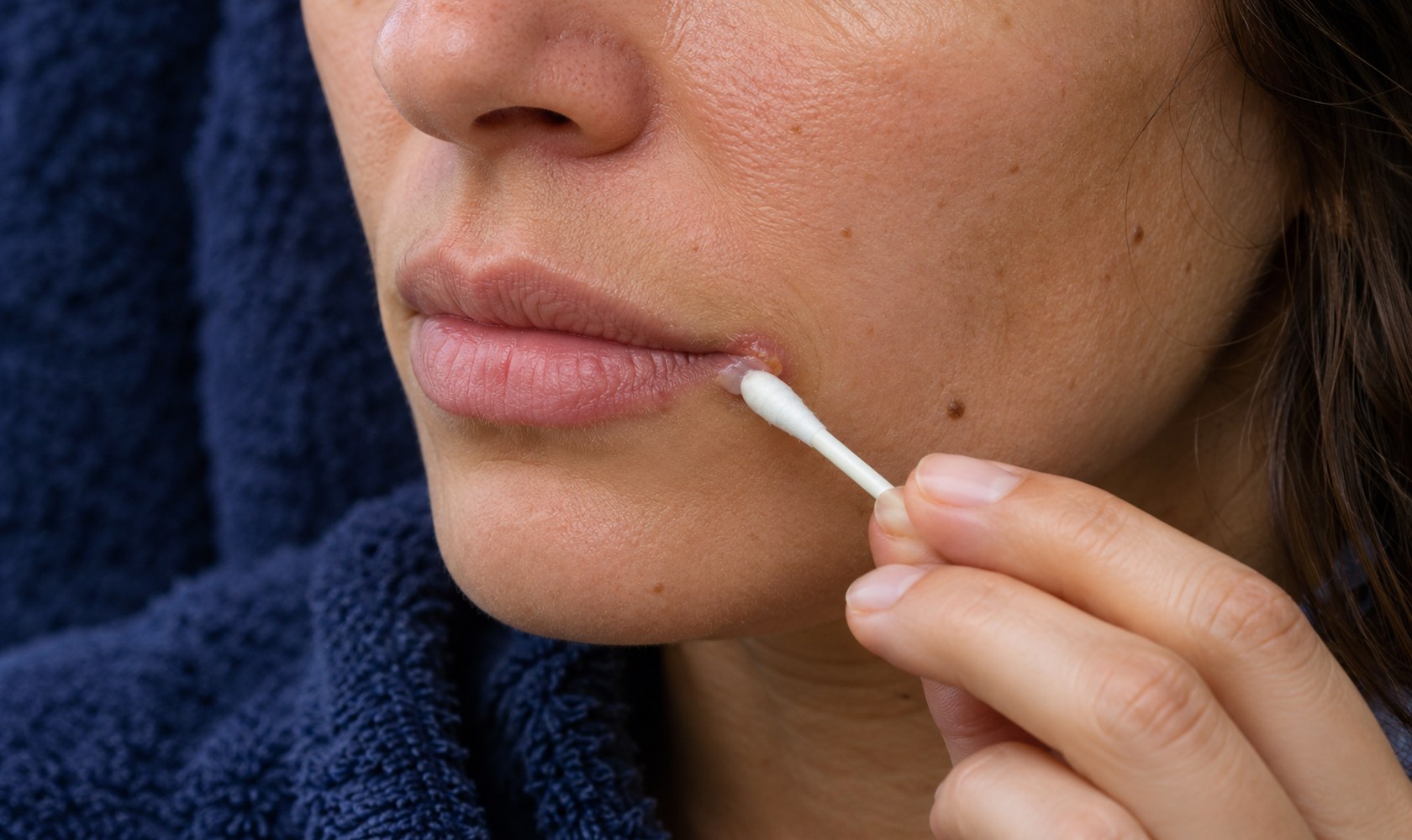
Why early treatment matters
Antivirals interfere with viral multiplication. They usually help most when you start at the first warning symptoms rather than waiting for a large crusted lesion. If cold sores recur, ask for a treatment plan before the next episode begins.
That plan should identify the medicine, when to begin, how often to use it, and when to stop. Keep instructions with the product. Different creams and tablets use different schedules, so do not transfer directions from one product to another.
Earlier treatment does not guarantee that a blister will never develop. It also does not make kissing or oral sex safe during symptoms. A shorter episode can still involve virus at the surface of the skin.
Acyclovir cream
Acyclovir cream provides a prescription topical option for recurrent cold sores in suitable patients. A commonly labeled schedule uses application five times daily for four days, beginning as early as possible. Follow the directions for the product and age group that the clinician prescribes.
Use it on the specified external area. Do not put an oral cold sore cream inside the mouth, in the eyes, or on genital lesions unless a clinician has supplied instructions for a different product intended for that location.
Local burning, dryness, irritation, or itching can occur. Tell the clinician if application makes the area increasingly sore or produces a rash. More frequent application than the label instructs does not establish a better result and may increase irritation.
Docosanol and other nonprescription choices
Docosanol 10%, sold as Abreva, offers a nonprescription cold sore treatment. Its usual instructions call for application five times a day from the first symptoms until healing, within the label's duration limits. Check the actual package for age restrictions and when to seek advice.
The medicine can shorten healing and symptom duration for some people, but it does not cure HSV or reliably stop every blister. Local irritation or an allergic reaction can occur. Stop and obtain advice if a product causes a concerning reaction.
Docosanol treats cold sores on the face or lips. It does not treat genital herpes. A familiar brand name on a pharmacy shelf does not mean the product suits every type or location of HSV infection.
Oral antiviral treatment
A clinician may prescribe an oral antiviral when episodes are troublesome, frequent, or difficult to manage with topical care. Valacyclovir offers one short-course option for recurrent cold sores. A standard adult regimen for suitable patients uses 2 g at the first symptoms and another 2 g twelve hours later for one day.
That example does not apply automatically to children, people with kidney impairment, or every medical situation. The prescriber needs to assess the appropriate dose. Do not borrow a genital herpes schedule or take leftover tablets to reproduce a regimen without checking.
Headache, nausea, or other adverse effects can occur. Kidney problems can increase risk from an unsuitable dose, and some patients need adjustments. Tell the clinician about kidney health, other medicines, pregnancy, and any previous reaction before treatment.
Acyclovir and famciclovir also have roles in clinician-directed oral treatment. The choice depends on the episode pattern and the individual patient. Ask whether episodic treatment or a preventive strategy better addresses the way cold sores affect you.
Protect the sore while it heals
A small amount of plain petroleum jelly may help prevent cracking and make the area more comfortable. Use a clean method of application and avoid repeatedly touching the lesion. Protecting the surface serves a different purpose from stopping viral multiplication.
A cool compress or a cold drink may ease discomfort. Avoid picking off a crust, which can reopen the skin and delay healing. If acidic or salty food stings, choose foods and drinks that you can tolerate while the area recovers.
Ask a pharmacist about a pain reliever if you need one. Check suitability with your health conditions and other medicines. Do not assume that a product labeled for skin pain belongs on a lip lesion or inside the mouth.
Do not improvise with steroid cream or multiple products
Hydrocortisone alone is not a general cold sore treatment. A clinician may prescribe a specific combination product in an appropriate situation, but that differs from adding an ordinary steroid cream to a herpes lesion yourself.
Using an antiviral alongside a protective ointment can address different needs, but several active products can irritate skin or complicate application instructions. Ask how to space products rather than layering everything at once and assuming the effects add up.
A protective ointment does not guarantee prevention of a bacterial infection. Increasing redness, swelling, discharge, worsening pain, or a change from the usual course needs assessment. Do not cover those changes with more cream and wait indefinitely.
Identify triggers without expecting complete control
Some people notice cold sores after intense sun exposure, illness, stress, fatigue, hormonal changes, or injury near the mouth. Dental procedures or other local trauma can matter for a person who repeatedly develops episodes afterward. Others cannot identify a clear pattern.
Use lip sun protection and limit excessive ultraviolet exposure if sunlight triggers episodes. Reapply a suitable SPF lip product according to its instructions. Adequate sleep and support with stress can help daily well-being without guaranteeing that HSV will remain inactive.
Regular meals, activity, and hydration support general health. They do not provide a cure, and an outbreak does not prove that your immune system is weak. Avoid restrictive food rules or supplements that promise to prevent all recurrences without reliable evidence.
Reduce contact that can transmit the virus
Avoid kissing and oral sex from the first warning symptoms until the sore has healed. Oral HSV can transmit to a partner's genital area during oral sex. A lesion need not look severe to carry a transmission risk.
Do not share lip balm or other items that contact the sore. Wash your hands after touching the area or applying treatment, and avoid touching your eyes. Direct contact with the affected area deserves more attention than fears about ordinary casual proximity.
HSV can also shed without visible sores, so symptom avoidance reduces risk without removing it. Discuss cold sore history with a partner before intimate contact rather than promising that symptom-free skin can never transmit infection.
Know when to request medical care
Seek assessment if a sore fails to follow the usual healing pattern, episodes become frequent or severe, or you cannot comfortably eat or drink. People with immune suppression may need earlier treatment and closer review. A possible first episode deserves attention if you are unsure of the diagnosis.
Eye pain, redness, light sensitivity, or vision changes during an HSV episode needs urgent medical assessment. Do not apply a lip product near the eye. Avoid kissing newborn babies when you have a cold sore, and contact a pediatric clinician promptly about a baby's possible exposure or symptoms.
During pregnancy or breastfeeding, check treatment choices with a clinician rather than assuming every topical or oral option has the same instructions. Bring the exact product name and dose, along with when symptoms began.
Sources
- American Academy of Dermatology. Cold sores: Diagnosis and treatment. https://www.aad.org/public/diseases/a-z/cold-sores-treatment
- DailyMed. Abreva - docosanol cream. Drug labeling. https://dailymed.nlm.nih.gov/dailymed/search.cfm?query=docosanol
- DailyMed. Valacyclovir. Prescribing information. https://dailymed.nlm.nih.gov/dailymed/search.cfm?query=valacyclovir
Related reading
- Genital Herpes Medications: Comparing Treatment Options
- Sex After a Herpes Outbreak: Healing, Risk, and Partner Decisions
- Health Guide
Medical Disclaimer: This content is provided for informational and educational purposes only and does not constitute personalized medical advice, diagnosis, or treatment. Always consult a qualified physician or licensed healthcare provider with any questions regarding a medical condition or prescription medication. Read our Editorial & Medical Review Policy.